Last Updated: 11th November 2025
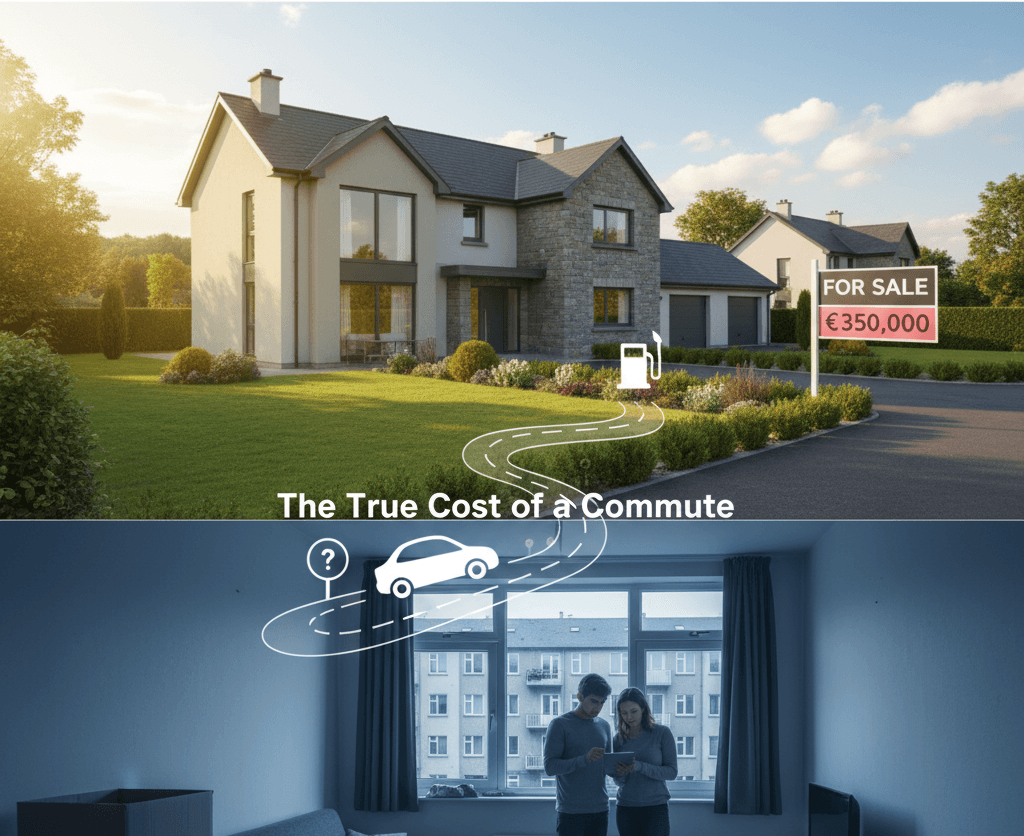
It's the classic Irish dilemma. You're scrolling through property sites, and you see it: a spacious three-bedroom house with a garden, priced for €100,000 less than the tiny two-bed apartment you're currently renting in the city. The catch? It's in a commuter town in Meath, Kildare, or Wicklow.
ℹ️ Median Price of 3-bed Semi 2025 (data from HousePrice.ie):
The temptation is huge. You imagine lower mortgage repayments, more space, and a better quality of life. But before you call the bank, have you really calculated the true, long-term cost of that "cheaper" house?
That cost, of course, is the commute.
The Daily Grind: Driving is Draining Your Wallet
Many new commuters' first instinct is to drive. But let's be realistic about what that means in 2025.
- Fuel: Petrol and diesel prices remain high and unpredictable.
- Tolls: The M50, M1, M4, and M7 aren't getting any cheaper. This is a guaranteed daily expense.
- Parking: A day's parking in Dublin, Cork, or Galway city centres can easily cost €20-€30. That's potentially €500+ a month before you've even paid for fuel.
- Stress & Time: We don't call it "dead time" for nothing. Sitting in gridlock traffic is stressful, unproductive, and bad for your mental health.
When you add it all up, the cost of driving can easily eat away at your mortgage savings, fast.
A Smarter, Cheaper Way to Travel
This is where modern commuter coach services shine. Forget the old stereotypes; today's commuter coaches are designed for the working professional. Routes from major hubs like Navan, Naas, or Greystones into city centres are more reliable, frequent, and cost-effective than ever.
- Fixed Cost: An annual or monthly bus ticket is a predictable expense you can budget for. It is almost always significantly cheaper than the combined cost of fuel, tolls, and parking.
- Productive Time: This is the real game-changer. With comfortable seats and (on many services) free Wi-Fi, your commute time becomes your time. You can get a head-start on emails, read a book, or simply relax and listen to a podcast. You can't do that when you're stuck in traffic.
- Reliability: With ongoing initiatives like BusConnects and expanding services, dedicated bus corridors and priority timings mean your coach is often the most dependable way to beat the city gridlock.
Running the Numbers: House Savings vs. Commute Costs
So, the coach is the clear winner over the car. But it still has a cost, both in money (your ticket) and in time. The only way the move makes financial sense is if the money you save on your property is significantly more than your lifetime travel costs.
This is the critical step most people skip. They see the lower house price, but they don't calculate the 30-year cost of the commute required to live there.
Before you commit to a longer commute, perform a quick check: what is the actual difference in property value between your current city location and the commuter town you're considering? You can use a resource like HousePrice.ie or the property price register to find the real average sale prices in both areas. Only then can you accurately calculate if the savings outweigh the monthly or yearly cost of that coach ticket and your time.
Once you have that data, your calculation becomes simple:
(Price of City Property) - (Price of Commuter Property) = Total Property Saving
(Annual Coach Ticket Cost) x (Number of Years Commuting) = Total Commute Cost
If your Total Property Saving is much larger than your Total Commute Cost, you've found a smart move. But if the property saving is small, that "cheaper" house could end up being the most expensive decision you ever make.
Make an Informed Decision
Moving to a commuter town can be a fantastic decision for your lifestyle and your finances. But don't let a "bargain" house price fool you.
Do the maths. Calculate the true cost. And if the numbers add up, we'll be here to make your new commute as comfortable, affordable, and productive as possible.